Key Takeaways
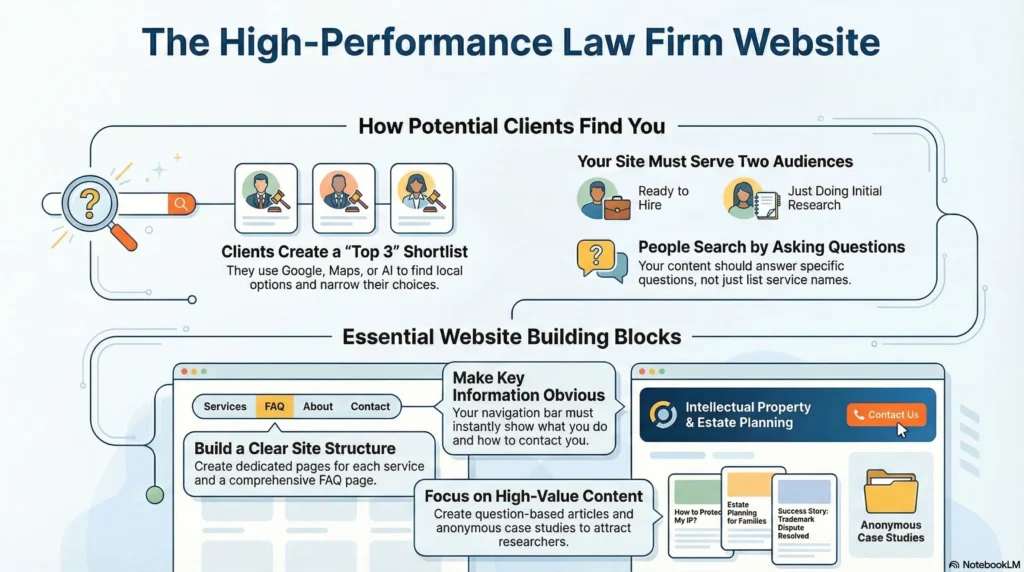
- • Most people searching for lawyers start with local searches on Google Maps or regular Google search, then narrow down to their top 3 choices based on location and reviews
- • Your website needs to work for people ready to hire AND people still researching – both groups will eventually become clients
- • AI assistants like ChatGPT and Claude are becoming common research tools, performing searches similar to how humans do
- • A clear navigation bar answering “who are you, what do you do, and how do I contact you” is fundamental but often missed
- • Question-based content ranks better than service descriptions alone because that’s how people actually search
Website optimization for law firms isn’t about gaming the system. It’s about organizing information the way people actually look for it – whether they’re typing into Google, asking ChatGPT, or scrolling through maps.
Why do most attorney websites fail at local search?
Here’s something most SEO experts miss: when someone searches for an estate planning attorney or trademark lawyer, they’re almost always looking locally. They’re physically in the area where they need legal help. This sounds obvious, but the implications run deeper than you’d think.
People find attorneys through three main paths. First, they open Google Maps, type “estate planning lawyer,” and scan the business profiles that appear. They check reviews, location, maybe click through to a website. Second, they search on Google itself – something like “trademark lawyer San Francisco” – and scroll through the top 15-20 results, checking locations as they go. Third, and increasingly common, they ask an AI assistant to research and recommend lawyers based on their specific needs.
All three paths lead to the same outcome: a shortlist of 3 attorneys they’ll actually contact.
What about people who aren’t ready to hire yet?
This is where law firm visibility strategy gets interesting. A significant portion of searches come from people in the research phase. They’re exploring options, reading about processes, trying to understand their situation. Some will eventually need to hire someone. If they encountered your content during their research, the decision becomes easier. They think, “I’ve seen this firm before, they seemed knowledgeable, let’s start there.”
Your website needs to capture both groups – the ready-to-hire searchers and the still-researching crowd. This means optimizing for multiple search intents, not just commercial keywords.
What actually needs to be on every page?
Your navigation bar should answer basic questions instantly: What do you do? How can I contact you? Where can I learn more? This means having your logo visible, a brief description of your practice, phone number, contact button, and clear links to services, pricing, and about pages. Sounds simple, but most attorney websites miss this completely.
Every page needs a hero section that delivers immediate value. Whether someone lands on your homepage, a service page, or a blog post, they should immediately think “this is what I was looking for” or “this seems right, let me explore more.” That first impression determines whether they stay or leave.
How long should my pages actually be?
Keep pages focused. Four to five content blocks are usually enough to communicate your message without overwhelming visitors. This isn’t about being minimal for the sake of it – it’s about respecting people’s time and attention.
Here’s a small detail that matters: add a one-sentence description of your practice in the footer. Many visitors never reach your about page, but they scroll to the bottom. Give them something useful there.
What content should I be creating?
Question-based content is crucial for attorneys. People often search by asking questions rather than typing service names, especially during the research phase. Posts that answer specific questions match how people actually search. Think “What happens to my assets if I don’t have a will?” instead of “Estate Planning Services.”
Case studies work well too, even anonymous ones. People in research mode search for similar scenarios, trying to understand how situations develop. Giving them real examples helps them see themselves in the content.
If you want to stand out further, consider adding an AI-powered chat to your website. It helps visitors get immediate answers and creates another touch point.
What’s the technical side I can’t ignore?
Create dedicated pages for each service you offer. This builds proper website hierarchy – homepage describes your practice, service pages present individual offerings. Search engines understand this structure, and it helps you rank for specific searches.
An FAQ page serves everyone: Google likes it, real users appreciate quick answers, and AI assistants use it when researching on behalf of users. It’s one of those rare wins across all channels.
The Bottom Line
Effective SEO for attorneys isn’t about tricks or hacks. It’s about organizing your website around how people actually search and making decisions. Some are ready to hire immediately. Others are researching and will hire eventually. Your website should work for both, with clear navigation, valuable content at every entry point, and structure that makes sense to humans and search engines alike.
The attorneys who get found online aren’t necessarily the ones with the biggest marketing budgets. They’re the ones who understood that law firm visibility comes from being helpful at every stage of the client journey – from that first research question to the decision to pick up the phone.